Tight Houses cause Water and HVAC design concerns.

Two real life, on the ground,  issues have me concerned both as a builder and purported Hi-Performance, Energy Efficient design consultant.

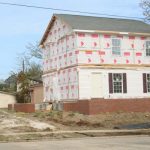
1.  In pre-planning a Structurally Insulated Panel(SIP) condominium quadruplex there are  practical heating and air conditioning problems to be solved.  Do you use time tested conventional approaches or install evolving HVAC equipment?

This building’s thermal envelope(exterior shell) is so energy efficient and tight that the HVAC load requirements for each unit(950 SF) are below that of the smallest sized, readily available, cost effective, conventionally ducted HVAC equipment.  This means the conventional unit is oversized, a no-no in High Performance housing.

A readily available, 16 SEER, 1.5 ton Heat Pump is almost double the size necessary to heat and cool these units.  The problem isn’t about being able to heat and cool the unit. It is how do you remove the interior moisture(humidity) consistently?  An oversized unit runs in short spurts and every time it stops, dehumidification stops. The solution is either utilizing the new mini-split, inverter technology units or adding a dehumidification system to the conventional unit.  The decision has to be based on performance and cost.  Stay tuned.

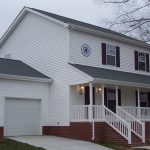
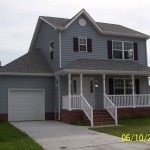
2.  A group of affordable, energy efficient houses were built with conditioned crawl spaces and a super tight building envelope. The houses have developed condensation/moisture issues on the interior of the homes.  The homes were built with no design input from experienced Green Builders or real world Hi-Performance home consultants.  They were not Energy Star Certified, so there were no third party Hers Raters involved.  This type of problem is caused by the theory of, “Make the house tight, and forget about evaluating other issues that have to be solved in designing a tight, Green Home.”   Stay tuned for solutions.

The theory to reality application is going to present issues now and into the future, as more and more builders, designers, etc. jump on this believed economic windfall Green job wagon. Many so called experts are Tin Men, just selling stuff, not economic, practical solutions.
Modular Building Sense

Modular Home Construction, unfortunately, gets a bad rap.  Any house made in a controlled environment(IE a factory) is referenced all too often as a Modular Home, especially by the salespeople who don’t want to call their HUD code homes by their correct name– Trailers,  Mobile Home or Manufactured Home.  This is not a slur on HUD code, Trailers or Mobile Homes.  My first house was a mobile home, a trailer put on a foundation.  It was a great home.   It was a great place to get my feet wet in home-ownership after leaving the Army.
A Mobile Home or trailer is built to a specific code called a HUD code.  It is not built to local building codes.  It takes special zoning to allow this house to be put on a site.  Just because a mobile home is put on a foundation, doesn’t make it a modular or permanent house.  The one true way to tell if a home is built to a HUD code is it always has chassis under it, so wheels can be attached and it can be moved.  These homes have improved 1000 of % in quality and structural stability over the past 10-15 years.  They are being used in many redevelopment areas and the uninformed person could never tell it was a mobile home.  Some of them are two stories and quite stately.
“Modular Building Goes Mainstream in Storm-Ravaged Areas”

“Factory-built homes engineered for coastal conditions are taking off in towns devastated by Hurricane Sandy.”

By Jennifer Goodman

http://www.builderonline.com/modular-building/modular-building-goes-mainstream-in-storm-ravaged-areas_o.aspx?utm_source=newsletter&utm_content=jump&utm_medium=email&utm_campaign=BBU_032814&day=2014-03-28

As the above article highlights, with today’s shortages of qualified tradesman, modular building is solving the problem.

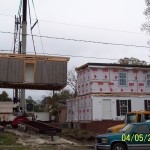
What a majority of consumers don’t understand is a Modular house is built to the local building code.  It is built to the same standard as that stick built-on site-home we are all familiar with.  Instead of assembling all the parts on site, it is built in a controlled environment(no rain, no snow, no freeze).  It is built out of the same components as on-site built housing, both single and multi-family, only better and stronger.   The United States Navy builds its AirCraft Carriers, the big boys, by modular construction practices.  If it is good enough to withstand the storms of the North Atlantic and Pacific, it is strong enough to sit on a building site and last.  Modular constructed homes have been shown in Florida to sustain hurricanes substantially more intact than stick built homes.  The quality? Come on, there are multi-million dollar beach and mountain houses being constructed modularly by people who don’t have to worry about money or budgets.  See “Modular Mansions” by Sherri Koones or “Prefab Green” by Kaufma & Remick.  They have come a long way baby.

.

Renovation, Adaptive-ReUse and Affordable Housing Building Advisers.